Art & World / Volume I
Four presences.
One descent.
The witness. The guide. The ferryman. The prisoner.
A study of identity, expression and the weight of a silhouette.
From the visual development of DANTE’S INFERNO.
AI-assisted artwork, shaped through human art direction.
01 / The witness
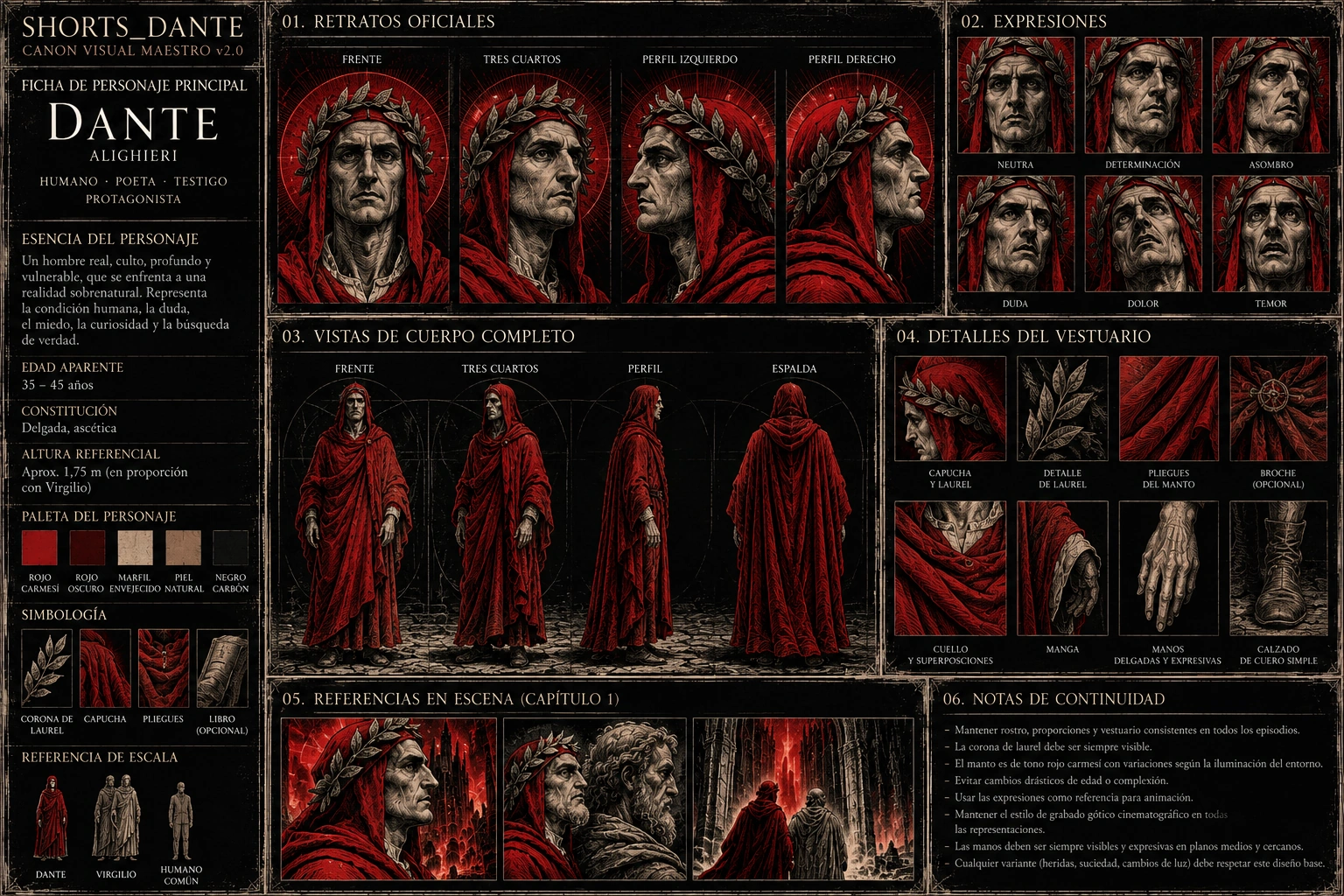
Dante.
A living man at the edge of the unknown.
Dante carries the journey’s vulnerability. His face must hold doubt, attention and the will to continue. A crimson cloak and a visible laurel crown make his silhouette recognisable, even when the world around him disappears into shadow.
Expression studies
A face can change.
Its identity must endure.
Reading the design
Identity
A pronounced profile, sculptural cheekbones and pale, aged-ivory skin.
Costume
Heavy crimson drapery. The cloth should feel weighted, worn and physical.
Performance
Fear and resolve belong to the same person. Expression changes; identity stays coherent.
The witness must remain human. The marble-like quality lives in the light and the planes of the face, never in a lifeless performance.
Explore silhouette & costume
02 / The guide
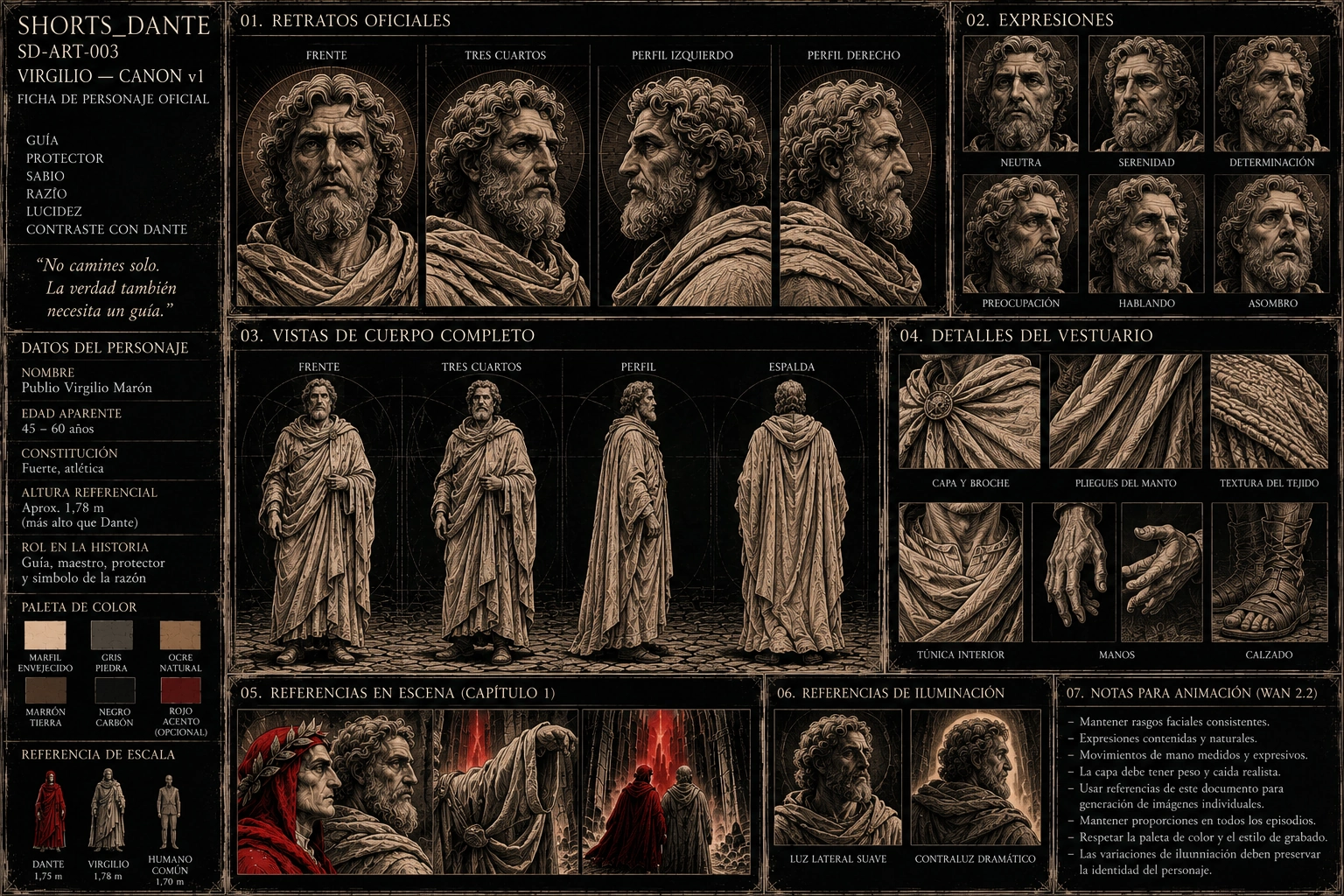
Virgil.
A steady presence in a world without certainty.
Virgil’s study explores authority through restraint: a bearded face, classical drapery and an unhurried bearing. Aged ivory and stone tones set him apart from Dante’s crimson. His presence offers direction without removing the danger of the journey.
Expression studies
A face can change.
Its identity must endure.
Reading the design
Identity
Sculptural features, wavy hair and a full beard create a distinct, mature silhouette.
Costume
Classical layers in aged ivory and stone. Their weight gives each gesture a clear shape.
Performance
Protection is expressed through attention, a turn of the body, or a hand that invites Dante to follow.
This sheet records an exploration of the guide’s face, clothing and gestures within the project’s visual language.
Explore silhouette & costume
03 / The ferryman
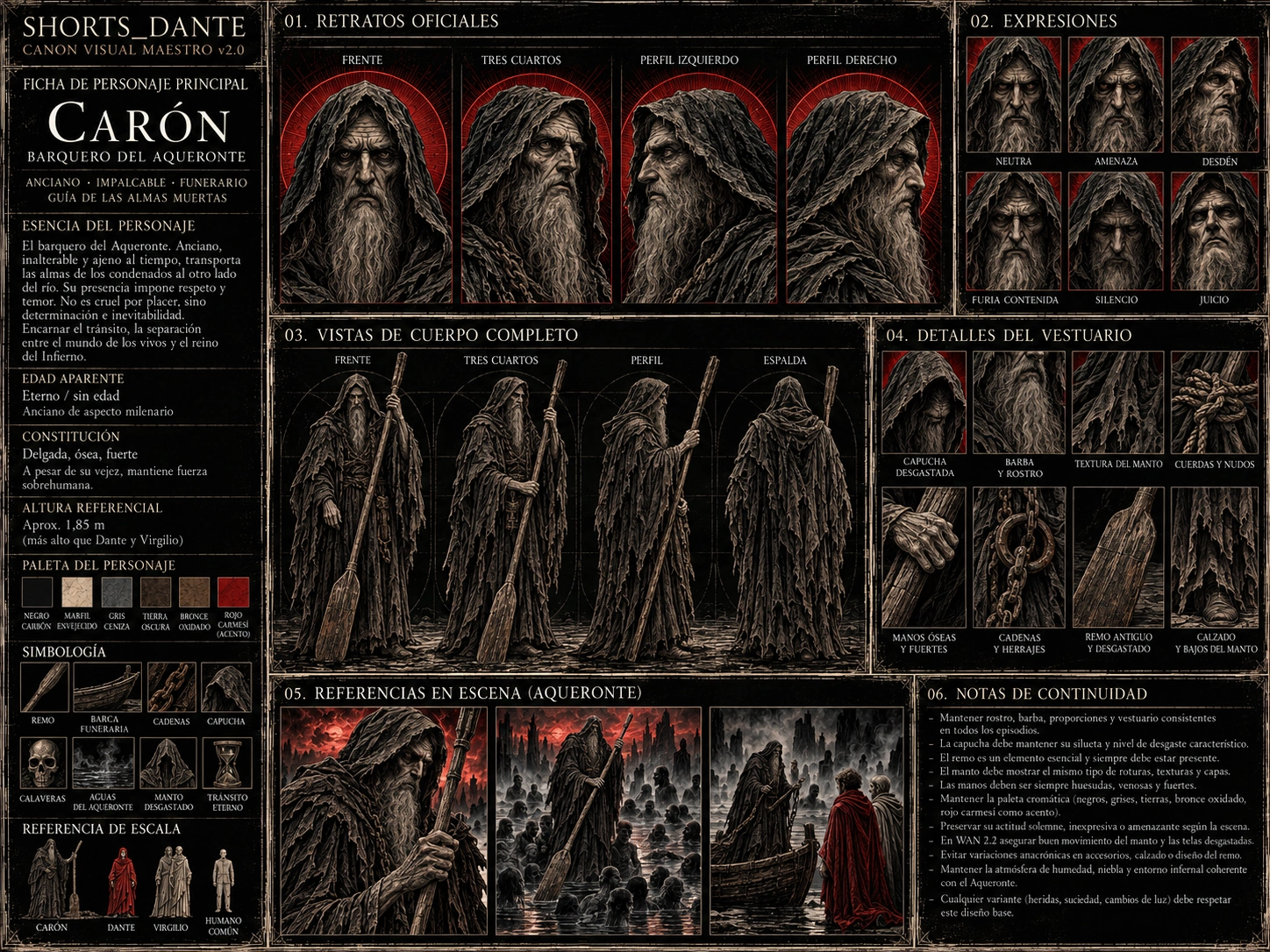
Charon.
The crossing has a keeper.
The ferryman is shaped by age, labour and the river. A worn hood, a long beard and an oar establish his presence before he moves. The design searches for an implacable figure whose strength feels physical rather than theatrical.
Expression studies
A face can change.
Its identity must endure.
Reading the design
Identity
A hooded, weathered face and a long beard frame a severe, watchful gaze.
Costume
Frayed cloth, knots and dark, earth-worn tones belong to the same river-bound world.
Performance
The grip on the oar, the weight of a step and a restrained look carry his authority.
The oar is more than an accessory. It connects the figure to the work of carrying souls across the water.
Explore silhouette & costume
04 / The prisoner
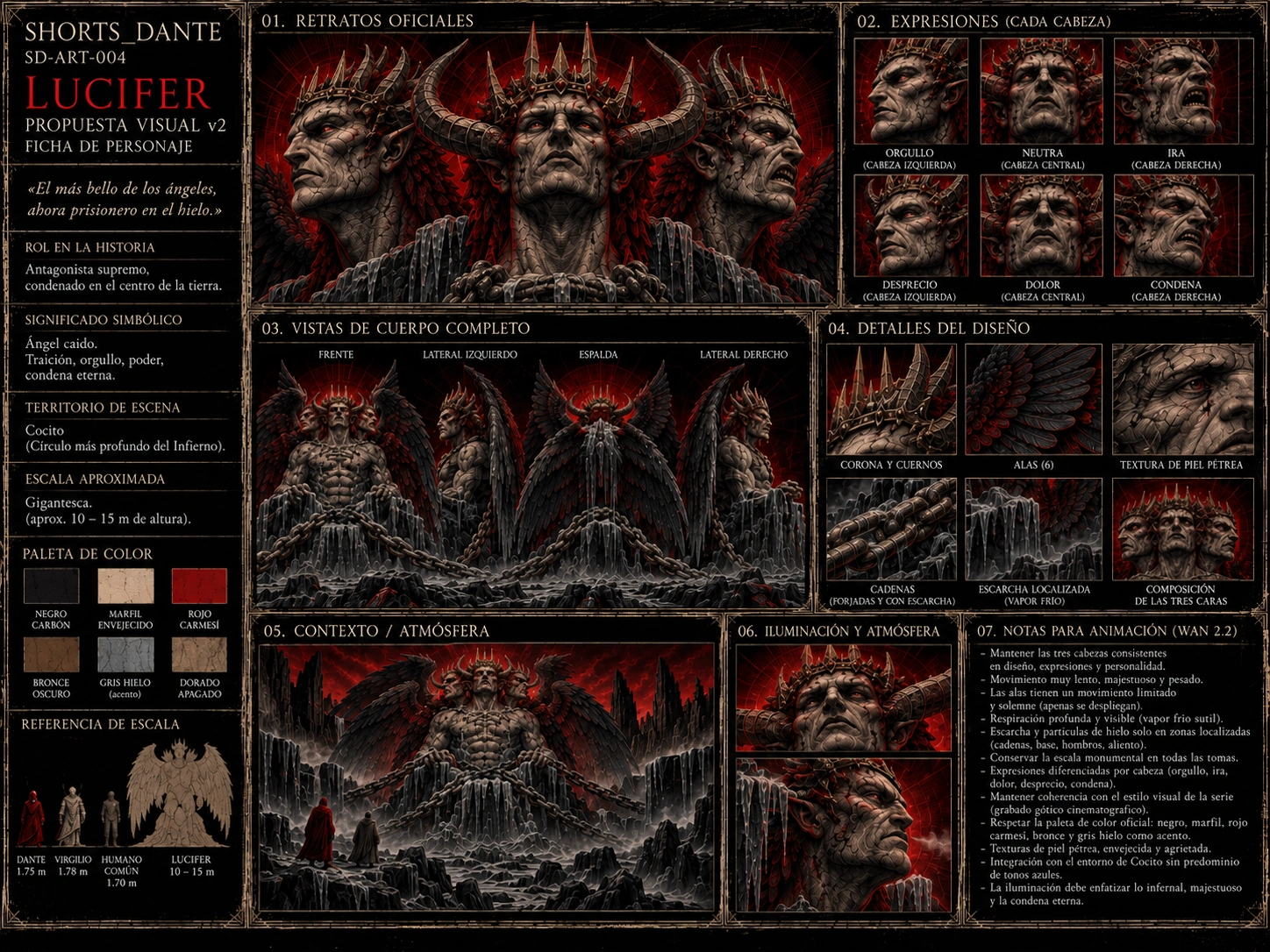
Lucifer.
Immense power, held in place.
Lucifer is conceived as a captive presence. Three faces, a broken crown, dark wings and chains create a silhouette of fallen majesty. Charcoal ice and fractured mineral surfaces give the scene its weight; crimson is used as an oppressive light.
Expression studies
A face can change.
Its identity must endure.
Reading the design
Identity
The central face dominates, while the two lateral faces retain their own direction and expression.
Material
Cracked, sculptural surfaces, heavy chains and dark mineral ice.
Performance
Small, deliberate changes in gaze and grip should make his scale felt.
The image should convey confinement as strongly as power. The ice is a prison, not a luminous ornament.
Explore silhouette & costume
A shared visual language
Carved by light.
Given life through performance.
Charcoal shadows, aged ivory, restrained crimson. Across the four characters, the same visual language becomes vulnerability, guidance, passage and confinement.